
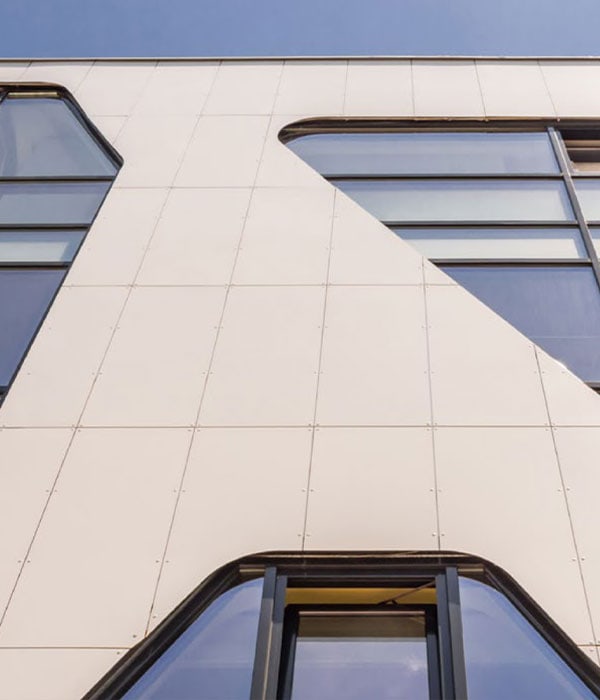
Facade laminate is an increasingly popular choice for construction projects, and the reason for this is clear. This versatile material combines durability, aesthetics, and practicality in a way that makes it an excellent alternative to traditional facade materials. When planning your next construction project, laminate offers a solution that meets both technical and design challenges.
The choice of facade material significantly affects a building's appearance, durability, and maintenance costs. Laminate has emerged as a strong competitor in the market, offering a unique combination of features that other materials cannot provide in the same way.
What is high-pressure laminate and why is it suitable for facades?
High-pressure laminate is a composite material pressed from multiple layers, consisting of a decorative surface layer, several layers of paper, and thermosetting resin. High pressure and heat combine the layers into a highly durable and dense material that effectively withstands external stresses.
In facade use, the strengths of laminate become particularly evident. The material is designed to withstand UV radiation, humidity fluctuations, and mechanical wear. The industrial manufacturing process guarantees a consistent end result, where each panel meets the same quality requirements. This makes laminate a reliable choice for facades where durability and maintaining appearance are key factors.
The lightness of laminate compared to concrete or stone facilitates installation and reduces the load on the building's supporting structures. At the same time, the material offers excellent protection against weather conditions and acts as an effective windbreak.
What are the advantages of laminate compared to other facade materials?
The biggest advantages of laminate are its lightness, ease of processing, and wide selection of designs. Compared to concrete, brick, or natural stone, laminate is considerably lighter and faster to install, which significantly reduces construction costs and time.
In terms of maintenance, laminate outshines many traditional materials. It doesn't require regular painting like wood or steel, nor does it crumble like concrete. Cleaning is simple with water and a mild detergent, which keeps maintenance costs low throughout the building's lifecycle.
In addition to installation speed, laminate offers better thermal insulation than metal facade materials. This improves the building's energy efficiency and reduces heating costs. Furthermore, laminate is non-conductive, making it a safer option in certain applications.
How durable is laminate outdoors?
High-quality facade laminate can withstand outdoor conditions for 20–30 years, maintaining its color and structural integrity. The material is designed to endure Finland's demanding weather conditions, including freeze-thaw cycles, UV radiation, and abundant rainfall.
The durability of laminate is based on its multi-layered structure and the resins used. The surface layer is treated with a UV protector, which prevents colors from fading and the material from becoming brittle in sunlight. The lower layers are impregnated with waterproof resins, which prevent moisture absorption and subsequent swelling or warping.
Mechanical durability is also excellent. Laminate withstands impacts, scratches, and abrasion better than many other facade materials. It is also not susceptible to damage caused by insects or fungi, unlike wood-based materials. Freezing-thawing cycles do not affect the material, as its moisture resistance is excellent.
What design possibilities does laminate offer for facades?
Laminate offers almost limitless design possibilities for facades thanks to its color, pattern, and texture options. Modern manufacturing methods allow for the perfect imitation of wood, stone, metal, and concrete looks, as well as the creation of completely abstract patterns.
The color palette ranges from subtle natural colors to bold, modern tones. Matte surfaces create an elegant look, while glossy surfaces bring dynamism and light reflectivity to the building. Textured surfaces can be used to create depth and visual interest in the facade.
The workability of laminate allows for versatile design solutions. The sheets can be cut, bent, and shaped according to architects' visions. Different colors and patterns can be combined to create unique compositions. Special-sized sheets are also possible, giving designers the freedom to create impressive facades in terms of scale. Explore the range of laminate products to find suitable options for your project.
How is laminate installed on a facade and what does it require?
The installation of laminate on a facade is usually done according to the principle of a ventilated facade, where the panels are attached to the supporting structure using an underlying construction. Installation requires precise planning and professional execution, but it is faster than the installation of many other facade materials.
Before installation, a proper substrate and ventilation gap are required to ensure moisture control. The substructure is dimensioned according to the size and weight of the laminate panels, and it is attached at precisely dimensioned points. The joints between the panels are sealed with materials resistant to weather conditions.
Installation work requires specialized tools and experience in handling laminates. Cutting and drilling the panels demand precision to ensure a flawless final result. When installed correctly, a laminate facade offers a long-lasting and maintenance-free solution. It is always recommended to leave the installation to professionals who are familiar with the material's properties and correct installation techniques.
If you are planning a laminate facade for your project, contact us. We help you find the right material options and provide technical support throughout the entire project. Thanks to our extensive experience, we can guide you toward the best solutions that meet both aesthetic and technical requirements.
