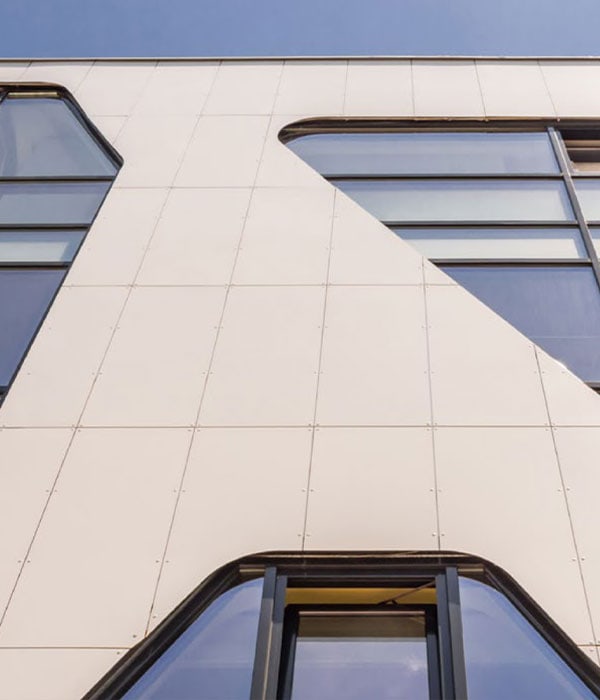
Laminate facades have become an increasingly popular choice for both public buildings and private homes as exterior cladding. This is no coincidence – modern exterior cladding laminates offer a unique combination of durability, versatility, and aesthetic appeal. Facade panels and HPL facades provide architects and designers with almost limitless design possibilities.
As facade materials in the laminate category continue to evolve, it's important to understand the technical properties and suitability of different options for various building types. The right material choice significantly impacts both the building's appearance and its long-term durability.
What makes exterior cladding laminates a popular facade material
Exterior cladding laminates have established themselves in the facade market thanks to several practical advantages. The lightness of the material significantly simplifies installation compared to traditional stone materials, which reduces both construction costs and structural requirements.
Another significant advantage of a laminate facade is its low maintenance. Unlike wood or metal, laminate does not require regular painting or treatment to maintain its appearance. The material's coating is resistant to UV radiation, pollution, and weather conditions for decades with no significant wear.
Design possibilities make facade laminate a particularly attractive option. Modern manufacturing techniques allow for almost any surface texture and color to be realized. Architects can create unique facades that imitate natural materials or implement entirely new design concepts.
ABET LAMINATI - High-pressure laminate technical specifications
ABET LAMINATI high-pressure laminates represent the pinnacle of expertise in facade applications. The manufacturing process for these HPL facades utilizes high pressure and temperature, resulting in an exceptionally dense and durable structure. The material thickness typically ranges from 6 to 13 millimeters, providing sufficient strength even for large facade panels.
Technically, ABET LAMINATI products meet international standards for weather resistance and fire resistance. The material has a low coefficient of thermal expansion, which reduces stress on mounting points during temperature fluctuations. This feature is particularly important in Finnish conditions, where temperature differences between seasons are significant.
The coating technology ensures colorfastness and surface cleanability. The material's closed surface structure prevents the absorption of dirt and moisture, which significantly eases maintenance. The antibacterial coating also makes the material a hygienic option for public buildings.
Choice of exterior cladding laminate for different building types
In residential buildings, facade panels offer an excellent balance between aesthetics and practicality. In private houses, natural material-imitating surfaces, such as wood patterns or stone textures, are often preferred. In apartment buildings, on the other hand, modern, monochrome surfaces create a stylish and timeless look.
In public buildings, such as schools and hospitals, the hygienic properties of laminate facades are emphasized. The material versatile product range It withstands effective cleaning and disinfection without losing its appearance. The color selection allows for strengthening the building's identity through its visual appearance.
In industrial buildings, laminate category facade materials offer a cost-effective solution that combines functionality and a professional appearance. The material's resistance to chemicals and mechanical stress makes it a suitable option for demanding environments.
Suitability of material for climate conditions
Finland's varied weather conditions place special demands on facade materials. HPL facades are designed to withstand freeze-thaw cycles, UV radiation, and humidity fluctuations. The material's dimensional stability ensures that the panels retain their shape despite temperature variations.
In coastal areas, the risk of corrosion caused by salt and moisture is minimal for laminate facades. Unlike metal facades, laminate does not rust or oxidize, which ensures its appearance is maintained for a long time, even in demanding conditions.
Design tips for implementing laminate facades
Successful laminate facade design begins with careful color selection. Dark shades create a dramatic look but can cause significant heat buildup in sunlight. Lighter colors reflect heat better and are well-suited for large facade surfaces.
Panel division design significantly affects the final result's aesthetics. Large, continuous surfaces emphasize the building's monumentality, while smaller panels create a more human scale. Combining vertical and horizontal elements brings rhythm and interest to the facade.
The design of the details is critical to the success of a laminate facade. The treatment of joints, corner solutions, and finishes around window openings require precise planning. Properly executed details make the facade professional and durable.
Color and surface combinations
Modern laminate facades allow for combining different surfaces and colors on the same building. Alternating glossy and matte surfaces create interesting light streaks at different times of the day. The use of contrasts highlights the architectural elements of the building and creates visual hierarchy.
The imitation of natural materials has developed significantly in recent years. Modern wood patterns and stone textures are so realistic that the difference from the original material is difficult to detect. This allows for the utilization of the aesthetics of natural materials without their maintenance requirements.
Installation planning
The installation of a laminate facade requires careful planning already during the building design phase. The dimensioning of the ventilation gap, the placement of fastening points, and consideration of thermal movement all affect the long-term functionality of the facade. A skilled installer will ensure that all technical requirements are met.
The building's geometry affects the selection of panel sizes and the amount of cutting waste. Using standard sizes reduces costs, but custom dimensions allow for an optimal result. It is advisable to consult with the material supplier during the design phase to find the most cost-effective solutions.
Laminate facades offer modern buildings an excellent combination of aesthetics, durability, and practicality. When designed and implemented correctly, they create unique architectural solutions that retain their beauty for decades. If you are considering using a laminate facade in your project, contact us – we help you find the right materials and solutions for your needs.