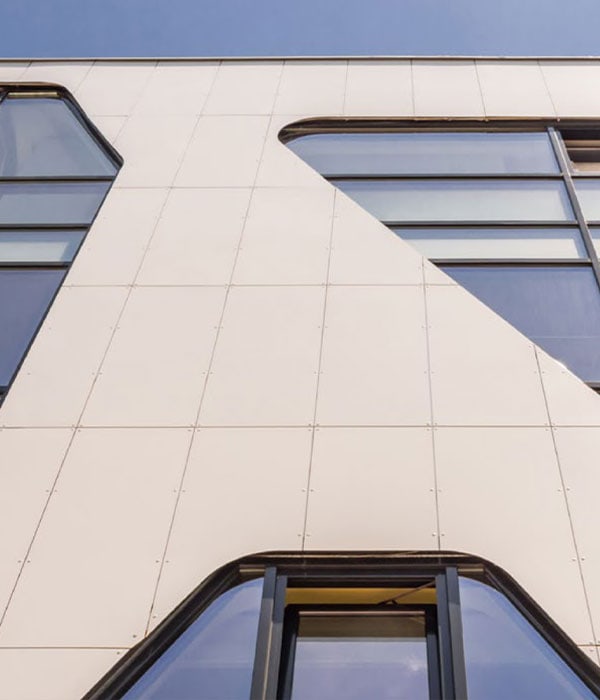
The selection of facade laminate requires careful evaluation of technical properties, as exterior wall materials are constantly exposed to varying weather conditions and mechanical stresses. A correctly chosen facade laminate ensures long-lasting and safe use, but incorrect choices can lead to costly repairs and safety risks.
Understanding the technical properties helps designers and builders make informed decisions that serve both aesthetic and functional goals. The following key factors determine the suitability of facade laminate for various applications.
What does the weather resistance of facade laminate mean?
The weather resistance of facade laminate refers to the material's ability to maintain its structural integrity and appearance when exposed to rain, wind, temperature fluctuations, and humidity over a long period of time. Weather-resistant laminate will not fade, crack, or detach from its fastenings due to normal climatic conditions.
Weather resistance is determined by several factors. The material's moisture resistance affects how it reacts to variations in rain and humidity. Thermal expansion, in turn, determines how much the material moves with temperature fluctuations. Good weather resistance also requires that the laminate's surface structure withstands freeze-thaw cycles without damage.
Weather resistance is tested using standardized methods where the material is exposed to accelerated weather conditions. The tests simulate years of use in weeks or months, allowing the actual durability of the material to be assessed before installation.
How does the UV resistance of facade laminate affect its lifespan?
UV resistance determines how well facade laminate retains its color and surface texture under the influence of ultraviolet radiation from sunlight. Poor UV resistance leads to rapid fading, surface embrittlement, and premature need for material replacement.
Ultraviolet radiation breaks down the polymer structures and pigment molecules in laminate over time. This process is particularly rapid in dark-colored materials, which absorb more heat. Light colors reflect UV radiation better and retain their appearance longer.
High-quality facade laminates contain UV stabilizers that significantly slow down the degradation process. These additives can extend the material's lifespan by up to several decades compared to unprotected options. UV resistance is measured using standardized tests that simulate years of sunlight exposure under laboratory conditions.
What are the most important mechanical properties of facade laminate?
The main mechanical properties of facade laminate are impact resistance, flexural strength, tensile strength, and fastening strength. These properties determine how well the material can withstand wind loads, building movements, and potential impacts.
Impact resistance tells how much energy a material can absorb without breaking. This is especially important in lower layers where the risk of mechanical damage is greater. Flexural strength, on the other hand, determines how well a laminate can withstand wind-induced deflections without cracking.
Adhesion strength affects how well a material sticks to its substrate in various stress situations. The fastening strength determines how strongly a laminate adheres to its fastening points and resists pull-out forces. These properties are tested using standardized methods that provide comparable values between different materials.
How is the fire performance of facade laminates assessed?
The fire performance of facade laminates is assessed according to European classification standards, which determine the material's flammability, flame spread rate, and smoke generation. The classification directly affects where the material can be used.
Fire classification is expressed by an alphanumeric code, such as B-s1,d0 or C-s2,d1. The first letter (A-F) describes the fire performance of the material, where A is non-combustible and F is easily flammable. Smoke development is indicated by an s-value (s1-s3) and the formation of combustible droplets by a d-value (d0-d2).
Building regulations require certain fire classes at different heights and for different uses. Tall buildings generally require better fire classes than low buildings. Fire behavior testing is a multi-stage process in which material is exposed to controlled flame tests under laboratory conditions.
What should be known about the installability of facade laminate?
The installability of facade laminate is determined by the material's weight, flexibility, fastening methods, and workability. Easily installable material reduces labor costs and improves final outcome quality.
The weight of the material affects fastening requirements and the safety of lifting operations. Lightweight laminates are easier to handle, but they may require more frequent fastening due to wind loads. Flexibility determines how well the material adapts to substrate irregularities without special leveling measures.
Workability includes the ease of sawing, drilling, and edge finishing. High-quality facade laminates provide clean cut surfaces with standard tools and do not chip during processing. Fastening methods range from mechanical fixings to adhesive solutions, and the choice depends on both the material and the project's requirements.
A thorough evaluation of technical specifications ensures the successful selection and long-term use of facade laminate. To familiarize yourself a range of high-quality facade laminates, you can browse the available options. If you need help with material choices or want to discuss your project requirements, contact us. We help you find the right solutions for your facade project.