Facade laminate is one of the most popular surface materials in modern construction – and for good reason. This versatile material offers a unique combination of durability, aesthetics, and practicality, making it an attractive alternative to traditional facade materials. When planning your next construction project, it's worth exploring the benefits offered by facade laminate compared to other materials.
The popularity of facade laminate is based on its ability to meet the demands of modern construction. It combines technical performance with visual appeal in a way that makes it suitable for both residential and public buildings.
What is facade laminate and how does it differ from other facade materials?
Facade laminate is a high-pressure surface material made from multiple layers of paper impregnated with phenolic and melamine resins. The material is created when these layers are pressed together under high temperature and pressure, forming a highly durable and dense surface material.
Facade laminate differs significantly from traditional facade materials such as wood, stone, or metal. Unlike natural materials, laminate does not absorb moisture and does not react to changes in weather conditions in the same way. Compared to metal surfaces, laminate does not corrode and does not require special protective treatments.
The structural assembly of laminate also makes it a lighter alternative to stone or concrete structures. This facilitates installation and reduces the overall structural load of the building. At the same time, the material maintains a strong structural integrity that matches the performance of heavier materials.
What are the biggest advantages of facade laminate in terms of durability?
The durability of facade laminate is based on its unique manufacturing process and material structure. The high-pressure manufactured surface is exceptionally resistant to UV radiation, moisture, temperature fluctuations, and mechanical wear compared to most other surface materials.
The material's UV resistance is a particularly significant advantage. While painted surfaces and many plastics fade due to sunlight, laminate retains its color and surface texture for decades. This means lower maintenance costs and a longer lifespan.
Laminate's moisture resistance is another significant durability advantage. The material does not absorb moisture, which prevents mold, rot, and deformation. This makes it particularly suitable for Finland's variable weather conditions, where moisture and temperature fluctuations stress building materials.
Mechanical durability is reflected in the material's ability to withstand impacts, scratches, and wear. The hard surface of laminate is not easily damaged, making it a durable option even for high-traffic public spaces.
How does the maintenance of facade laminate compare to other materials?
Facade laminate requires significantly less maintenance than traditional facade materials. Regular washing with water and a mild detergent is enough to keep the surface clean, while wood requires painting or treatment every 3–5 years, and metal may need rust prevention treatments.
Maintaining wooden facades is particularly laborious. They require regular painting, sanding, and repair of any rot damage. Laminate eliminates most of these maintenance needs. The only regular maintenance required is cleaning the surface, which can be done with basic tools without special expertise.
Maintenance of metal surfaces often focuses on preventing corrosion and repairing potential rust damage. Laminate does not corrode or rust, which completely eliminates these maintenance costs. This makes it a particularly cost-effective option in the long run.
Maintenance of stone surfaces requires special cleaning agents and expertise. In contrast, laminate maintenance is so simple that the property's own staff can handle it as part of normal cleaning procedures.
What design possibilities does facade laminate offer?
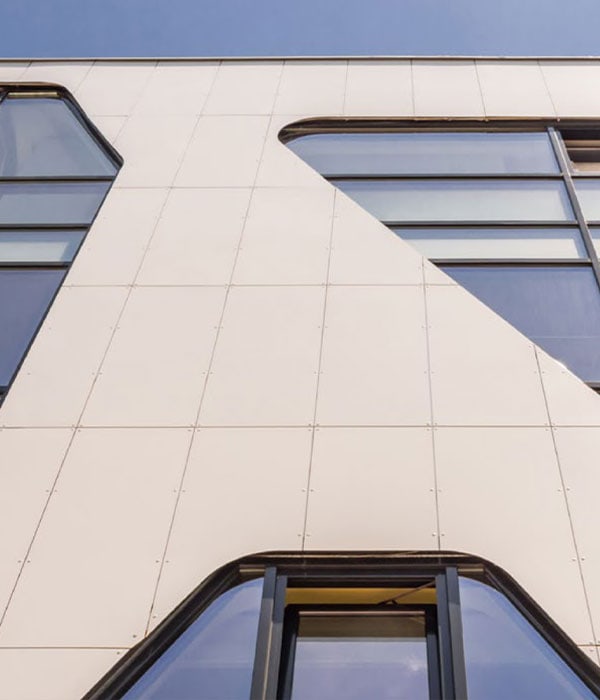
Facade laminate offers almost unlimited design possibilities in terms of colors, textures, and surfaces. Modern manufacturing methods make it possible to create almost any visual appearance, from wood grain patterns to modern metallic looks and abstract designs.
The color selection is wider than with most other facade materials. Any color or color combination can be printed on laminate, and these colors will remain vibrant throughout the material's lifespan. This allows for bold design solutions that would not be practical with traditional materials.
The texture options are equally diverse. Laminate can mimic the surfaces of natural materials, such as the grain of wood or the texture of stone, or create entirely unique surface structures. This gives architects and designers the freedom to realize their visions without the limitations imposed by the material.
The adaptability of laminate also allows for the creation of complex shapes and curved surfaces. The material can be bent and shaped in a way that is not possible with stone or many metals, opening up new architectural possibilities.
How do the costs of facade laminate compare to other options?
The initial investment for facade laminates is often competitive compared to high-quality traditional materials, but the real savings come from operating costs. Low maintenance requirements and a long service life make laminate a cost-effective option in the long run.
Installation costs are generally lower than with heavy materials like stone or concrete. The lightness of laminate reduces the need for supporting structures and speeds up the installation process. This saves on both material and labor costs.
The difference in maintenance costs is significant. While a wooden facade might require painting every 3-5 years, costing 20-40 euros per square meter, laminate maintenance is mostly limited to washing. This means savings of thousands of euros on larger projects.
Energy efficiency can also affect overall costs. Laminate's insulating properties can improve a building's energy efficiency, which is reflected in lower heating costs. This makes it an even more attractive option for cost-conscious builders.
If you're considering facade cladding for your next project, it's worth looking into high-quality surface materials and product range with an expert. We have extensive experience in supplying high-quality surface materials, and we help you find the right solutions for your project. Contact us, then we can discuss how we can support the success of your project with the right material choices.