
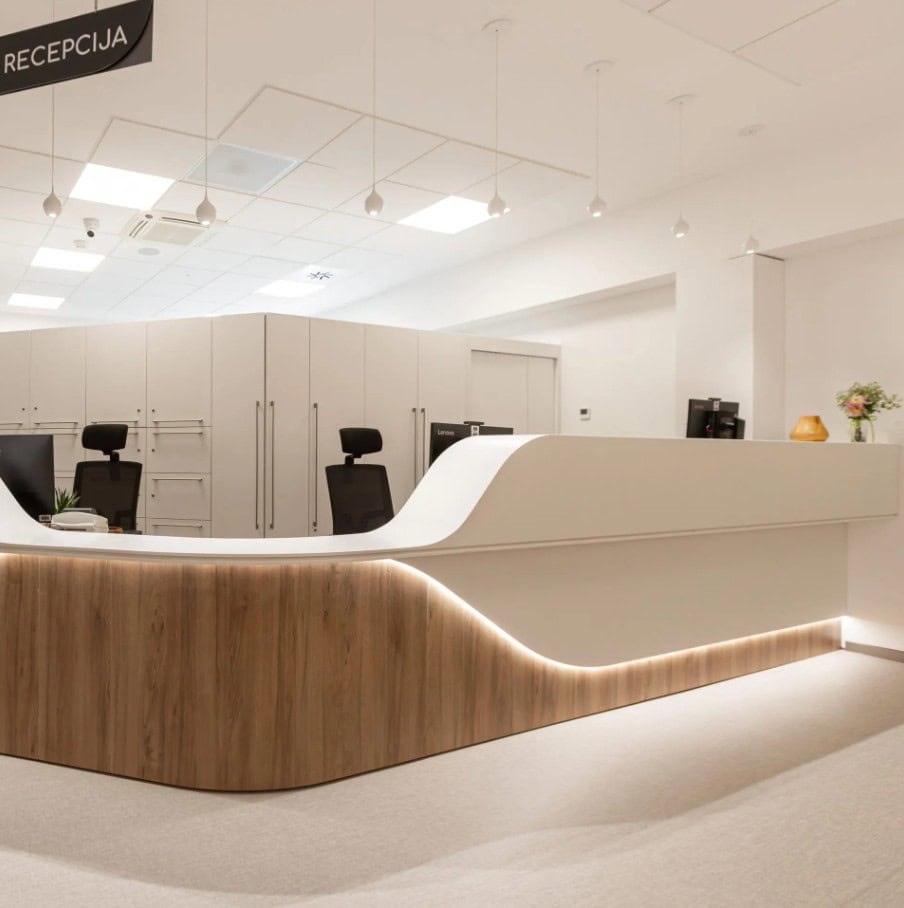
Composite panels are surfacing materials made from a solid mineral material that combine durability, versatility, and aesthetic quality. They differ from acrylic sheets in their composition and properties, and they are widely used in kitchens, bathrooms, and public spaces alike. In this article, we go through the most common questions about composite panels and their usage.
What is the difference between composite panels and acrylic panels?
Composite sheets consist mainly of mineral fillers and resin binders, while acrylic sheets are made mostly of acrylic polymers. The main practical difference is the material's feel and durability: composite sheets are heavier, harder, and more resistant to mechanical wear, whereas acrylic sheets are lighter and easier to shape using heat.
In composite materials, such as Kerrock composite panels, the mineral content is typically high, which makes them extremely dense and hygienic. The surface does not absorb moisture or create a breeding ground for bacteria, making them particularly well suited for wet rooms and applications requiring food contact.
The advantage of acrylic sheets is their optical clarity and easy formability. They are a popular choice when seamless, even curved surfaces are desired with reasonable weight. Composite sheets, on the other hand, are chosen when longevity, wear resistance, and a professional finish are top priorities.
Kerrock composite panels are best suited for which applications?
Kerrock composite sheet is best suited for applications that require moisture resistance, hygiene, and a durable surface. Typical applications include kitchen countertops, bathroom wall and surface panels, sinks, and surfaces in public spaces such as reception desks, healthcare facilities, and commercial kitchens.
Kerrock is particularly strong as a wet-room panel because its seamless surface prevents the accumulation of moisture and dirt. This makes it an excellent choice for bathrooms, for example, where seamlessness is both an aesthetic and hygienic advantage. The basins can be made from the same material as the countertop, resulting in a continuous surface with no visible seams.
In public spaces such as hotels, hospitals, and office buildings, Kerrock composite panels withstand intensive use year after year. The material's through-colored structure means that minor scratches are not noticeably distracting, as the color extends through the entire thickness of the panel.
What are the most popular composite panel brands on the market?
The most popular composite sheet brands are Kerrock, Corian (DuPont), HI-MACS (LG Hausys), and Staron (Samsung). These are all so-called solid surface materials based on a similar mineral-resin composition, but they differ from each other in terms of color selection, technical properties, and availability.
Kerrock stands out in particular on the European market, where it is known as a high-quality and versatile alternative. We We import Kerrock composite panels for Lorella. and we offer related technical support and expertise to designers and manufacturers.
Corian is the world's best-known brand in this category and offers a wide range of colors. HI-MACS and Staron are also strong players and are widely used in the furniture industry. The choice between the brands often depends on the project's requirements, available colors, and the service provided by the supplier.
How is a composite panel installed and glued?
The composite panel is usually installed by gluing it to a sturdy substrate using a suitable two-component adhesive or silicone adhesive. The joints are sealed and sanded to be seamless, making the final result look uniform. The installation requires craftsmanship so that the surfaces join together perfectly.
There are a few key steps in the installation process:
- Preparing start: The substrate must be flat, dry, and clean before gluing. Unevenness can cause stresses in the panel that may become visible on the surface over time.
- Cut and styling: Composite board is cut with woodworking machinery, such as a circular saw or router. The material behaves similarly to dense wood when cut.
- Gluing: The joints are glued using the two-component adhesive recommended by the brand, which is mixed until smooth and applied carefully. The adhesive must be allowed to cure sufficiently before further processing.
- Sanding and finishing: The seams are sanded to be seamless using sandpaper of various grit levels, and finally, the surface is polished to the desired finish.
Manufacturers always recommend using approved adhesives for the material and following the installation instructions carefully to keep the warranty valid and ensure a flawless result.
How are scratches on the surface of a composite board repaired?
Scratches on the surface of the composite sheet can be repaired by sanding, because the material is colored through its entire thickness. A superficial scratch is removed with fine sandpaper or Scotch-Brite-type sanding, after which the surface is polished back to its original gloss level. This is one of the most significant advantages of composite material.
The repair process proceeds as follows:
- Assess the depth of the scratch. Superficial scratches disappear easily with fine sanding, while deeper ones require multiple sanding stages.
- Start with a coarser sandpaper (for example, P120) and gradually move to finer ones (P240, P400).
- Finish the surface with Scotch-Brite or polishing compound to match the original finish.
- Clean the surface thoroughly to remove sanding dust.
It is important that the sanding is done evenly across the entire surface area, not just over the scratch. This avoids an uneven gloss level that might be visible in the lighting. Deep damage, such as cracks or chips, requires professional repair or replacement of the piece.
Is composite board suitable for outdoor use?
Most composite panels are not directly suitable for outdoor use without special UV protection, because prolonged sunlight can cause discoloration and surface fading. Kerrock and similar composite materials intended for indoor use are primarily designed for interiors, such as bathrooms, kitchens, and public spaces.
When composite board is being considered for semi-outdoor spaces, such as covered terraces or screened balconies, it is important to verify from the manufacturer's recommendations whether the product in question is suitable for that intended use. In spaces protected from direct rain and sun, some composite materials can perform well.
For outdoor applications, it is worth considering surface materials specially developed for outdoor use, which are designed to withstand temperature fluctuations, moisture, and UV radiation. If you are unsure about the suitability of the material for your project, An expert partner helps you find the right one a solution just for your needs.