
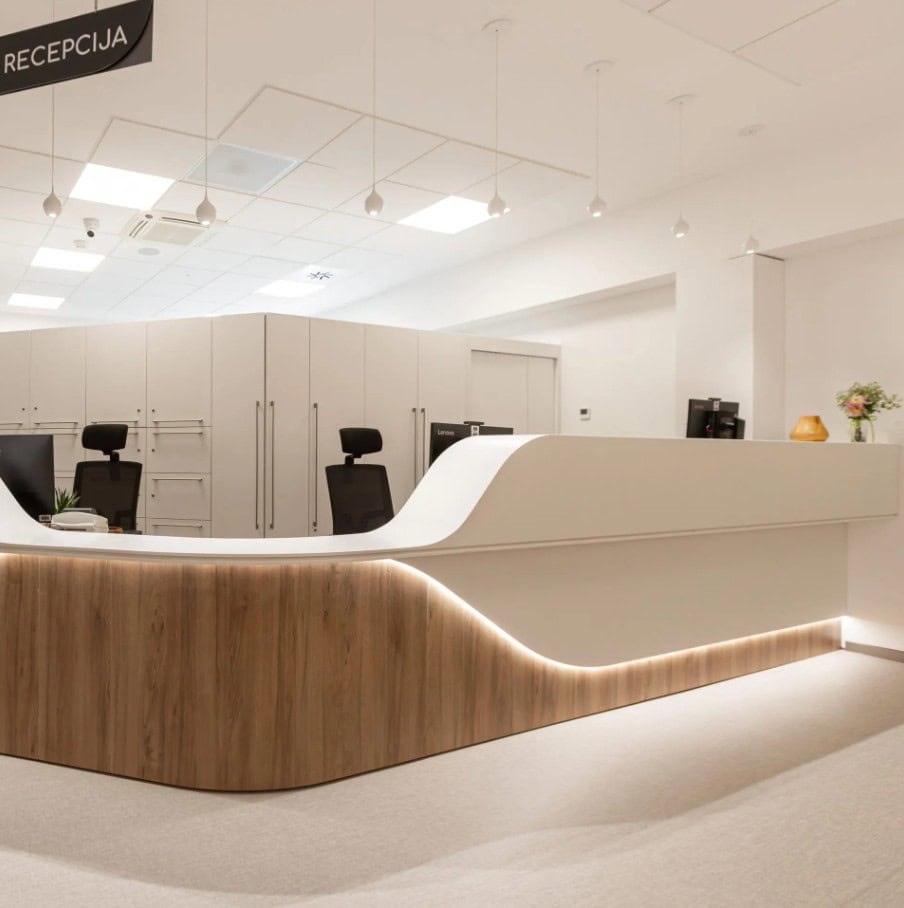
Surface materials best suited for public spaces are those that withstand intensive wear, mechanical stress, and repeated cleaning without their appearance or structure suffering. High-pressure laminates, composite panels, and high-quality interior panels are the most commonly used options because they combine technical durability with aesthetic flexibility. In the following sections, we will go through everything essential regarding the selection, classification, and expert assistance for public space surface materials.
What features are required of surface materials in public spaces?
Surface materials in public spaces require, above all, exceptional durability, ease of maintenance, and safety. The material must withstand high daily user traffic, mechanical impacts, scratches, and chemicals without significant wear. In addition, fire safety classifications and hygiene are often statutory requirements.
In public spaces, surface materials face a completely different level of stress than in residential use. In corridors, lobbies, schools, hospitals, and restaurants, materials are exposed to constant traffic, moisture, cleaning agents, and mechanical impacts. This means that mere aesthetic appeal is not enough; technical properties must also be documented and tested.
Key requirements are:
- Wear resistance or the ability to maintain a surface intact under intensive use
- Impact resistance for example against collisions and dents
- Chemical resistance against cleaning agents and disinfectants
- fire safety classification in accordance with building regulations
- Hygiene easy surface cleanability and prevention of bacterial growth
- Aesthetic durability in other words, the durability of colors and surface structures over the years
Which surface materials best withstand the wear and tear of public spaces?
High-pressure laminates, composite panels and high-quality interior panels withstand the wear and tear of public spaces the best. These surface materials are specifically designed for demanding conditions and meet strict technical requirements regarding wear, impact and even moisture.
High-pressure laminates in public spaces
High-pressure laminates, such as ABET LUMINATI products, are one of the most popular choices for public spaces. They are manufactured by pressing multiple paper layers impregnated with resin together at extremely high pressure and temperature, resulting in a surface that is very hard, dense, and wear-resistant. Laminate sheets are also easy to clean and available in a wide range of colors and surface textures, making them popular for both wall and furniture surfaces.
Composite panels for demanding applications
Composite panels, such as KERROCK, combine a mineral-based filler and acrylic resins into a homogeneous, non-porous material. This structure makes them extremely hygienic and durable even in damp spaces. Composite panels are excellently suited for worktops and sinks in hospitals, laboratories, and restaurants, for example, because their surface does not absorb dirt or moisture.
Interior panels and natural veneers
SIBU decorative and interior panels offer visually striking surface solutions for public spaces where aesthetics are an important factor alongside technical requirements. TABU through-dyed natural veneers, on the other hand, bring the feel of a genuine wood surface to spaces where a warm and high-quality look is desired without the maintenance requirements of solid wood.
How is the wear resistance of a surface material tested and classified?
The wear resistance of surface materials is tested in accordance with standardized European testing methods, and the results are expressed as classification numbers or letter codes. Most commonly used are EN standards, which measure surface wear, scratch resistance, impact resistance, and chemical resistance under reproducible laboratory conditions.
The key standard for high-pressure laminates is EN 438, which defines several different properties, such as surface hardness, wear resistance, and heat resistance. Laminate sheets are classified according to their intended use, for example, for horizontal surfaces, vertical surfaces, or for particularly heavy-duty use. The higher the classification number, the more demanding the application the material is suitable for.
Composite materials, such as KERROCK, are additionally tested for hygienic properties and chemical resistance, which is particularly important in healthcare and food industry applications. Designers or procurers should always request the product's technical data sheet from the material supplier, which shows all tested properties and their classification values.
Do the same surface materials suit both walls and furniture?
Some of the surface materials are suitable for both walls and furniture, but the choice always depends on the intended use and the level of wear. High-pressure laminates are a good example of a versatile material, but different thicknesses and strength classes are recommended for walls and horizontal furniture surfaces.
On wall surfaces, the stress is mainly mechanical, such as impacts and abrasion, whereas on furniture surfaces, the material is also exposed to heat, moisture, and chemicals. Because of this, thicker and harder laminate panels are used for worktops than for wall cladding, for example.
Composite boards, such as KERROCK, are particularly flexible in this regard: the same material can be used seamlessly in countertops, sinks, and wall surfaces alike, creating a cohesive and hygienic whole in, for example, kitchens or bathrooms. TABU's natural veneers, on the other hand, are exceptionally well-suited for both wall panels and furniture surfacing when a consistent wood-surfaced look is desired throughout the entire space.
How often must the surface materials of public spaces be renewed?
High-quality surface materials designed for public spaces typically last for decades when chosen correctly for their intended use and maintained properly. With cheaper or incorrectly chosen materials, the replacement cycle can be significantly shorter, even just a few years.
The need for replacement is determined above all by three factors: the original quality and suitability of the material for the application, the intensity of use, and the cleaning and maintenance practices. A correctly chosen high-pressure laminate or composite panel in a public space can serve flawlessly for decades without significant surface damage.
Achieving a long service life requires:
- The right material selection in relation to the number of space users and stress level
- Regular cleaning using methods recommended by the manufacturer
- Quick repair of small damages before they spread
- Professional installation that prevents moisture from entering the structures
Choosing high-quality materials also makes economic sense: although the purchase price of premium surface materials is higher, their longer lifespan and lower maintenance costs often make them a more affordable option when calculated over their entire lifecycle.
Where can I get expert help in choosing surface materials for public spaces?
Expert assistance in selecting surface materials for public spaces is best obtained from a specialized importer or surface material expert with a wide product range and technical expertise for various applications. The right partner helps match the material with the space's requirements, aesthetics, and budget.
I At Lorella, we specialize in high-quality surface materials right here. We import high-quality, design-oriented surface materials and offer expert support throughout the entire project, from material selection to technical details. Our range includes ABET LUMINATI high-pressure laminates, KERROCK composite boards, TABU natural veneers, and SIBU decorative panels, so you will find everything you need surface materials from a single product range from one place.
It is especially worthwhile to utilize expert help when:
- The target is demanding, such as a healthcare space, school, or restaurant
- The space has special hygiene requirements or fire safety regulations
- We want a consistent visual identity across multiple surface solutions
- The project requires technical documentation or certificates for the materials
A good surface material expert doesn't just sell products; they help you understand the technical properties, suitability, and long-term cost implications of different options. This ensures that the surface materials of a public space serve their purpose for decades to come. Feel free to contact via our experts' contact information and we will figure out the most suitable solutions for your project together.
