Composite materials have become popular surface solutions due to their durability and versatility. However, many designers and manufacturers wonder if they can combine composite panels with other surface materials to create unique and functional assemblies.
Combining composite materials with other surface materials is not only possible but also common in modern design. When implemented correctly, material combinations create visually engaging solutions and leverage the best properties of each material.
What does combining composite materials with other surface materials mean?
Combining composite materials means using two or more different surface materials in the same space or structure. This can be done by installing the materials side by side, building them on top of each other, or highlighting functionally different areas.
Combining can be done in many different ways. You can create contrasts by using composite panels as worktops and wood for the cabinet doors. Another approach is to take advantage of the technical properties of different materials – for example KERROCK composite panels in wet rooms and laminates in drier conditions.
Material combinations also enable cost-effective design. You can use the premium composite only in critical areas and complement the assembly with more affordable materials elsewhere.
Which composite materials are best suited for bonding?
Kerrock composite sheets are ideally suited for combination with other materials thanks to their smooth surface, versatile formability, and uniform color. They work well both as a primary and supporting material in various combinations.
Composite panels combine naturally with most surface materials. Wood brings warmth and naturalness alongside the modern look of the composite. Laminates offer a wide range of colors and textures to complement the neutral surface of the composite. Metals, such as stainless steel or aluminum, create an industrial contrast against the softer surface of the composite.
In wet room applications, composite materials work especially well together with ceramic tiles. The composite provides a seamless surface for basins and countertops, while tiles can cover wall surfaces.
How are composites technically joined to other materials?
The technical joining of composite to other materials requires careful design at the joints, the selection of correct fastening methods, and the consideration of thermal expansion of the materials. Successful joining begins with understanding the properties of the materials.
Connection points are critical in joining. Use profiles or strips to cover the seams between different materials. This not only improves the appearance but also protects the joint from moisture and mechanical stress.
Fastening methods vary according to the material combination. Composite panels can be fastened with screws, adhesives, or mechanical fasteners. Choose a fastening method that suits the properties and operating conditions of both materials.
Thermal expansion is an important factor to consider. Different materials expand in different ways with temperature fluctuations. Leave sufficient expansion joints and use flexible seals to compensate for these changes.
What factors should be considered when designing material combinations?
When designing material combinations, one must consider the technical compatibility of the materials, visual harmony, operating conditions, and maintenance requirements. A successful combination balances all these factors.
Technical compatibility is the basis for a sustainable solution. Ensure that the materials can withstand the same conditions and that their coefficients of thermal expansion do not cause problems. Composite materials are generally stable, but wood can move due to moisture.
Visual harmony is created through the careful selection of colors, textures, and shapes. Create balance by using a neutral composite as an anchor material and adding color or texture with other materials. Avoid using too many different materials in the same space.
Operating conditions determine the material choices. In wet areas, composite panels work well together with waterproof materials. In dry areas, the options are broader.
In what kinds of spaces or situations is it advisable to use composite material combinations?
Composite material combinations are worth using in kitchens, bathrooms, public spaces, and office environments where both functionality and aesthetics are needed. These spaces benefit from the diverse properties of the materials.
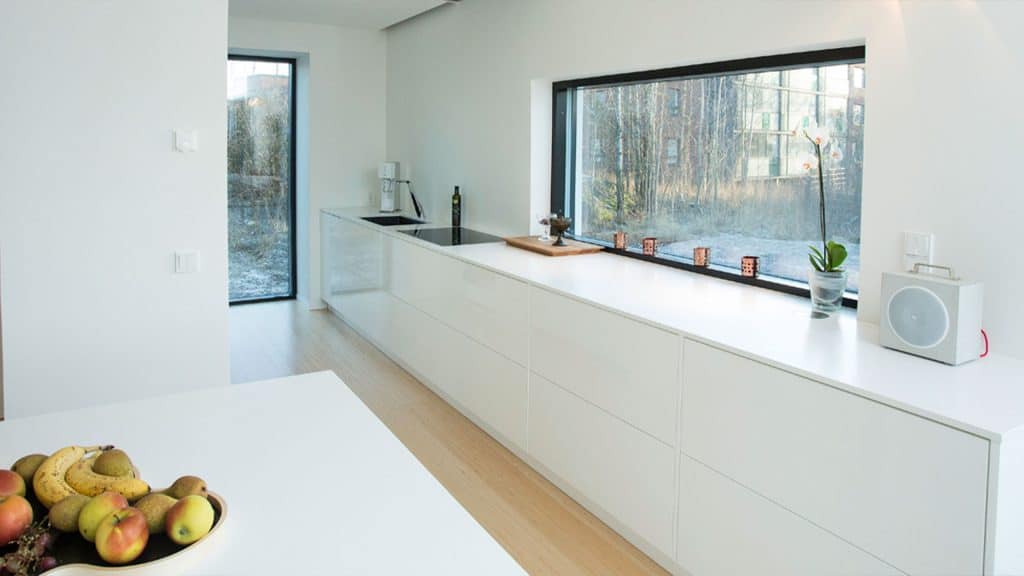
In kitchens, composite panels work excellently as countertops thanks to their hygiene and durability. Combine them with wooden cabinet doors or laminate surfaces to create a warm yet practical overall look.
In bathrooms, KERROCK composite panels are suitable for basins and countertops, while wall surfaces can be implemented using tiles or wet room panels. This combination offers both water resistance and easy maintenance.
In public spaces, such as hotels or offices, material combinations enable a cost-effective implementation. Use composite in high-wear areas and complement the overall design with other materials.
In office environments, composite materials combine well with metals and glass, creating a modern and professional look. This combination is also easy to maintain and durable for daily use.
Combining composite materials with other surface materials opens up countless possibilities for creative design. When executed correctly, material combinations offer the best aspects of different materials and create unique, functional solutions. If you are planning a material combination for your next project, contact us – autamme sinua löytämään juuri oikeat materiaalit ja tekniikat tavoitteidesi toteuttamiseen. Tutustu myös kaikkiin komposiitti- ja pintamateriaalituotteisiimme tai vieraile Loren verkkosivuilla for more information.