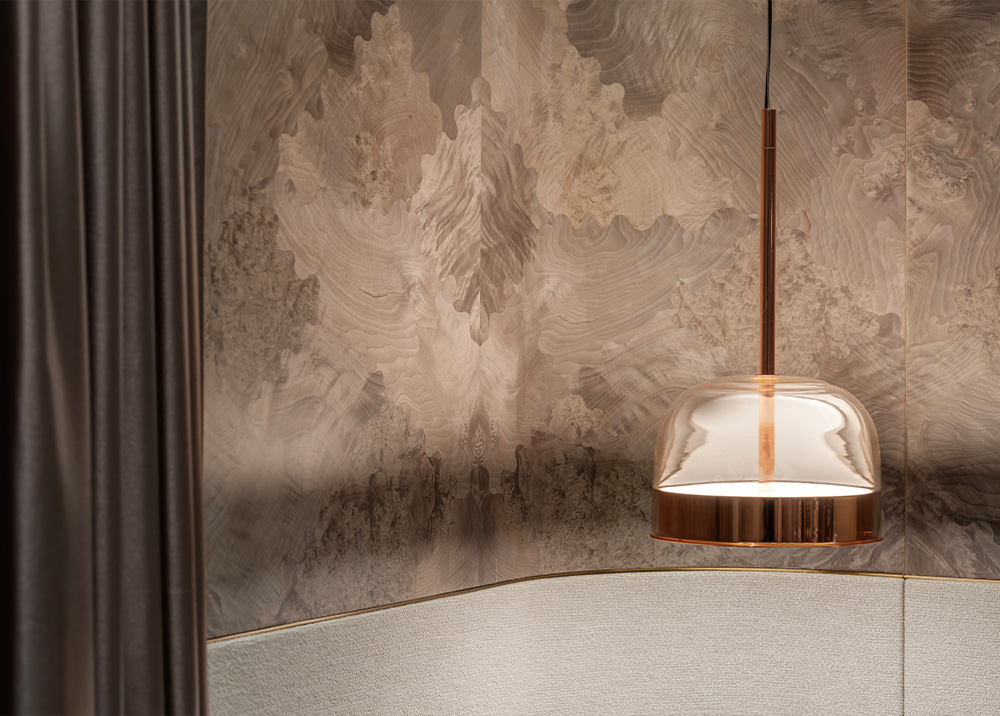
Natural veneers have become a major trend in contemporary architecture thanks to their unique aesthetics and environmental friendliness. Made by cutting very thin layers of wood, these thin wood panels offer the look and feel of real wood in a sustainable way. Natural veneers bring warmth and naturalness to modern buildings, while allowing for innovative finishes and material combinations that reflect the architectural trends of our time.
What are natural veneers and why are they on the rise in architecture?
Natural veneers are thin sheets cut from wood, typically 0.2-3 mm thick, and are made by cutting thin layers of valuable wood such as oak, ash or walnut, which are then attached to supporting structures such as plywood or chipboard.
Veneers have been in use for hundreds of years, but their popularity has seen a resurgence in contemporary architecture. This is due to a number of factors. Firstly, principles of sustainable development have become central to architecture. Natural slices allow the use of value trees without the need for solid wood, which saves significant natural resources.
Secondly, veneers offer architects and designers a huge range of creative possibilities. Technological advances have enabled veneers to be processed in new ways, such as through-dyeing, bending and various surface treatments, which extend their range of applications.
In addition, natural veneers have the unique ability to bring warmth and naturalness to otherwise cold and clinical spaces. This is particularly valued in contemporary architecture, which seeks to create harmonious and well-being-enhancing environments.
What are the most popular types of natural veneers in architectural projects today?
In architectural projects, several different wood species are favoured for their properties and aesthetic values. Oak is by far one of the most popular veneer species due to its durability, recognisable grain pattern and versatility.
The ash tree has become particularly popular thanks to its pale colour and its clear wart pattern. It is ideal for a modern, Scandinavian style. Through-dyed pulpit veneers are particularly in demand as they allow you to combine natural wood grain patterns with bold colours.
Walnut represents luxury and elegance. Its dark, rich tone brings depth and warmth to spaces. Walnut veneers are often used in high-end projects such as luxury hotels and prestigious interiors.
Exotic wood species such as eucalyptus, teak and zebrawood offer unusual patterns and colours that create spectacular elements in the interior. However, it is important to ensure that these wood species come from sustainably managed forests.
Indigenous wood species such as birch and spruce have also gained popularity as localism and short transport distances have become important values in sustainable architecture.
How are natural veneers used as an element of sustainable architecture?
Natural slices are an excellent choice for sustainable architecture, as they allow for efficient use of the value tree. A single tree can produce significantly more veneer cells than solid wood.
Responsible forest management certificates such as FSC and PEFC are an essential part of the sustainability of natural forests. These certificates guarantee that wood material comes from sustainably managed forests that respect biodiversity and social responsibility.
Compared to many other building materials, natural veneers offer a lower carbon footprint. Wood sequesters carbon dioxide as it grows, and when wood material is used in buildings, the carbon is sequestered for the life of the structure. This makes wood-based materials a climate-friendly alternative.
The flexibility of natural veneers also allows them to be used in a variety of innovative applications, such as acoustic panels that improve the indoor sound environment without the need for additional materials. Tabu is a pioneer in the development of such sustainable veneer solutions.
Modern ecodesign emphasises life-cycle assessment of materials and the circular economy. Natural veneers are well suited to this, as they are long-lasting and often recyclable at the end of their life cycle when properly installed and maintained.
In what ways can natural veneers be processed and modified?
The methods of processing natural veneers have become much more diverse with technological advances. One of the most innovative techniques is through-dyeing, where the veneer structure is completely stained while preserving the natural grain pattern of the wood.
Brushing is a technique in which the surface of the veneer is mechanically treated to enhance the natural grain pattern of the wood. This technique gives the veneer a three-dimensional, tactile surface that reacts to light in an interesting way.
Illustration and inlay technique allow you to create different patterns and designs by combining different types of wood or cutting veneer into different shapes. These techniques are particularly popular in public spaces where the aim is to create impressive visual elements.
Patination gives the veneer an old, time-worn look. This technique is particularly popular for restoring historic buildings or for creating a nostalgic atmosphere in a modern setting.
In addition, the veneers can be bent, perforated for acoustic properties and treated with various oils, waxes or varnishes to achieve the desired appearance and durability. These methods allow natural veneers to be used in a wide variety of applications in modern architecture.
How are natural veneers combined with other materials in contemporary architecture?
In contemporary architecture, natural veneers often act as contrasting elements alongside other materials. The combination of wood and concrete is one of the most classic and impressive material pairs. The cold and hard nature of concrete is significantly softened when combined with the warmth and texture of natural veneers.
Glass and natural veneers form another harmonious pair. The transparency of glass and the organicity of veneers complement each other, creating a balance between nature and modern technology. This combination is often seen in office buildings, where the aim is to create open but inviting spaces.
Combination of metal and veneer offers interesting contrasts in both colours and textures. Glossy steel or brass combined with a matt veneer creates a sleek and contemporary look. This combination is often used in details such as furniture or decorative trims.
Architects use the dialogue between materials to create spaces that stimulate the senses. For example, combining rough stone with smooth veneer creates a tactile contrast that makes the space more interesting and multi-sensory.
In modern buildings, veneers are also increasingly seen outdoors, where they are protected by special weather-resistant coatings. This allows visual continuity between the interior and exterior spaces and creates a harmonious whole. Discover interesting ways to use veneer surfaces in our references, where you can find inspiration for your own projects.
What to know about the selection and use of natural veneers in architectural projects?
When selecting natural veneers, it is important to understand the characteristics of the different species and their suitability for the intended use. Each species reacts differently to light conditions, moisture variations and wear.
When selecting veneers for a project, consider the purpose and conditions of the space. For public spaces with high consumption, you should choose harder wood species such as oak or ash. In damp areas, special attention should be paid to the protection of the veneers.
Correct installation and maintenance are key to the durability of veneers. Professional installation ensures that veneer surfaces stand the test of time and use. Regular and proper maintenance will significantly extend the life of the veneers.
The durability of veneer surfaces can be improved by various surface treatments. Modern varnishes and oils effectively protect wood from wear, UV radiation and moisture, while maintaining the natural feel of the wood.
When working with natural veneers, it is also important to take into account their natural variation. Each veneer is unique, and this natural variation is part of the charm and authenticity of the wood.
We can help you find the most suitable veneer materials for your project and offer expert advice on choosing the right type of veneer. Explore our wide range of natural furniture and wood products our range includes high quality natural veneers and through-dyed veneers that meet the demands of contemporary architecture in terms of both aesthetics and durability.