
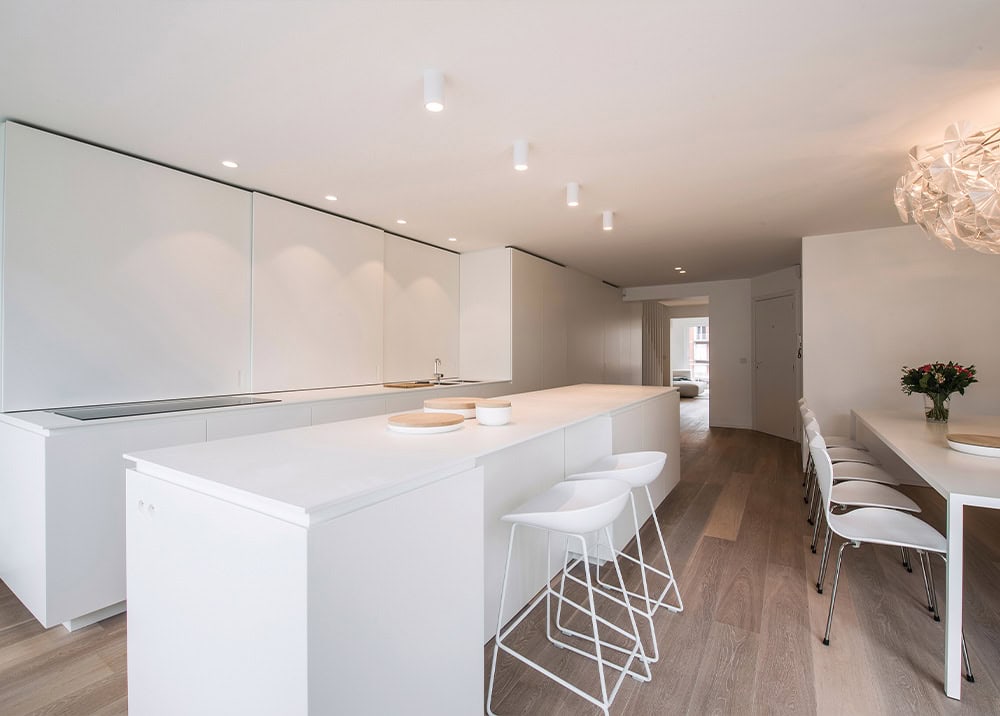
Composite boards have become one of the most popular surface materials in today's construction and interior design projects. These versatile materials combine durability, aesthetics, and practicality in a way that makes them an excellent choice for a wide range of applications.
The popularity of composite materials stems from their ability to meet today's demanding quality standards while offering design-oriented designers unlimited opportunities for creative expression. Let's take a closer look at what makes composite sheets such an attractive choice for professionals.
What are composite panels and why are they popular in construction?
Composite panels are surface materials made from several different materials, combining the best properties of natural minerals, resin, and pigments into one homogeneous panel. This combination produces a material that is both durable and aesthetically pleasing.
In construction, composite panels are popular due to their versatility and technical properties. Unlike traditional materials, composite panels are non-porous, making them hygienic and easy to maintain. They are more resistant to moisture, heat, and wear than many natural materials.
Designers value composite boards for their uniformity and predictability. The material's properties remain consistent throughout the entire board and do not have the typical variations or weaknesses found in natural materials.
What are the main properties and benefits of composite boards?
The most important properties of composite panels are their non-porous nature, through-colored structure, durability, and workability. These properties make them ideal for demanding applications.
Non-porosity means that the material does not absorb liquids or odors. This makes composite panels hygienic and easy to maintain, which is especially important in kitchens and wet rooms. The through-colored structure, in turn, allows the material to be processed without the color changing or wearing off.
In terms of durability, composite boards are highly resistant to impact, scratches, and chemicals. They do not fade or discolor due to UV radiation, making them suitable for outdoor use as well. Malleability is another significant advantage – composite boards can be worked almost like wood, but they offer better durability.
Composite panels are best suited for applications such as:
Composite boards are best suited for applications where durability, hygiene, and aesthetic quality are required. Typical applications include kitchen countertops, bathroom furniture, decorative panels, and surfaces in public spaces.
In kitchens, composite panels work excellently as countertops because they are resistant to heat, moisture, and acids. Their seamless surface prevents bacterial growth and makes cleaning easy. In bathrooms, the material's moisture resistance and hygienic properties make it an ideal choice.
In public spaces such as hospitals, schools, and offices, composite panels offer a durable and easy-to-maintain solution. They can withstand heavy use and retain their appearance for a long time. In wet room applications, composite panels are particularly beneficial due to their moisture resistance.
How are composite panels processed and installed?
Composite boards are machined with standard woodworking machines and tools, but due to their hardness, sharp and high-quality blades are needed. Machining the material requires a slightly different approach than traditional materials.
Sawing can be done with a circular saw or a jigsaw, but the blade must be designed for cutting hard materials. Routing and drilling holes are possible as usual, as long as the correct speeds and feeds are used. Grinding is possible and often necessary to achieve a smooth surface.
During installation, composite panels are usually attached by gluing or screwing. Gluing requires the selection of the correct adhesive and careful surface preparation. Screw fastening is possible, but the holes must be sufficiently large to account for thermal expansion. Seams can be made almost invisible with the right technique.
How are composite panels maintained and cared for?
Maintenance of composite boards is simple and only requires basic cleaning tools and agents. Daily cleaning can be done with a damp cloth and mild detergent, and no special care products are needed.
In normal use, composite panels will retain their appearance for many years without special measures. Stains and dirt marks are easily removed, and the material's surface does not absorb odors or colorants. It's advisable to be cautious with fatty and acidic substances, although composite panels tolerate them well.
Small scratches and signs of wear can be repaired by sanding and polishing. Deeper damage requires professional repair, but properly installed and used composite panels can last for decades without significant damage. Regular cleaning and careful handling ensure the material's longevity and the preservation of its beauty.
Composite panels offer an excellent combination of durability, aesthetics, and practicality for modern construction and interior design projects. Their versatility and technical properties make them a reliable choice for professionals who value quality and longevity. For example Kerrock composite material represent the best options on the market. At Lores, we help you find the perfect composite materials for your project and offer expert support in material selection. Contact us, then let's discuss together the best solutions for your specific needs.