
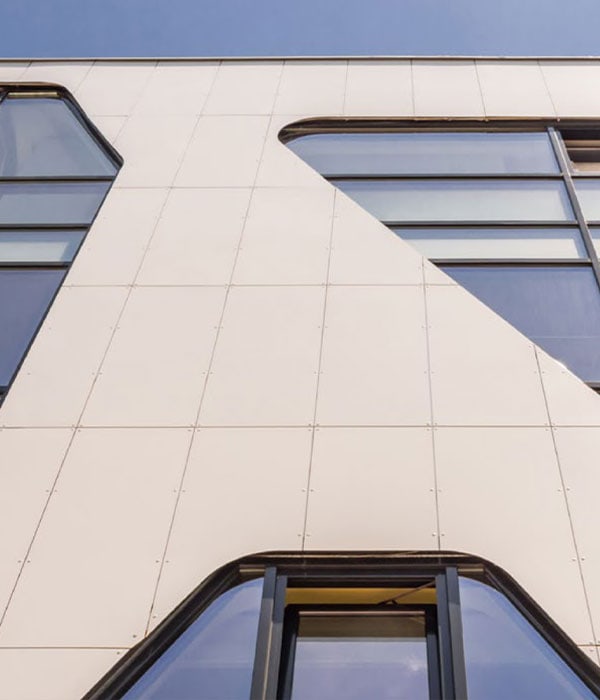
Facade laminate has become an increasingly popular option in construction projects, and for good reason. When looking for a durable and visually appealing solution for a building's exterior surfaces, high-quality facade laminate offers a superior combination of durability, aesthetics, and low maintenance.
A correctly chosen and installed facade laminate will retain its appearance for decades, making it a financially sound investment. Let's take a closer look at what makes facade laminate an excellent choice and how you can utilize it in your own project.
What is facade laminate and why is it a better choice than traditional materials?
Facade laminate is a high-pressure composite material made of multiple layers, offering excellent durability in outdoor conditions. It combines phenolic resin, fibers, and a decorative surface layer, creating a material that withstands UV radiation, moisture, and temperature fluctuations.
Compared to traditional materials, facade laminate offers significant advantages. Like wood surfaces, it does not require regular painting or varnishing, nor does it crack or warp like natural wood. In contrast to metal surfaces, it does not rust or corrode, and unlike concrete, it does not crumble or require frequent maintenance. The lightness of the laminate also facilitates installation and reduces the load on the structure.
How long does quality facade laminate last in outdoor conditions?
High-quality facade laminate can withstand outdoor conditions for 25–30 years while maintaining its original appearance and structural integrity. The best products offer even longer lifespans with proper maintenance and installation.
Durability depends significantly on the material quality and manufacturing method. Laminates produced under high pressure have better resistance to UV radiation, freeze-thaw cycles, and mechanical wear. Finland's variable weather conditions – cold winters, damp autumns, and hot summer days – do not significantly affect high-quality laminate.
The material's longevity makes it a cost-effective choice. When comparing life cycle costs with other materials, the low maintenance and long lifespan of facade laminate compensate for the higher initial investment.
What is the difference between different facade laminates and which one is best suited for my project?
Facade laminates differ from each other in terms of thickness, surface texture, color selection, and technical properties. Thicker laminates (8–12 mm) are suitable for demanding applications, while thinner ones (6–8 mm) are sufficient for ordinary buildings.
Surface structures affect both appearance and practicality. Smooth surfaces are easy to maintain and suitable for modern applications, while textured surfaces hide minor scratches better and give the building a more natural look. Matte surfaces reduce reflections, while glossy surfaces enhance colors.
The color palette ranges from neutral tones to bold color schemes. Light shades reflect heat better, which can be beneficial for energy efficiency. Dark shades, on the other hand, hide dirt better but can get hotter in sunlight.
How is facade laminate installed and what should be considered during installation?
Facade laminate is installed by attaching the panels to a substructure using mechanical fasteners or by gluing. Installation requires precise planning, the right tools, and experience in handling the material.
Critical factors for successful installation are the flatness and dryness of the subfloor. An uneven subfloor can cause stress on the laminate and lead to cracks. Moisture in the subfloor can cause mold problems and weaken the adhesion.
Thermal expansion must be taken into account, especially in large surfaces. Laminate expands and contracts according to temperature, so sufficient expansion joints must be left in the joints. The placement of fasteners and seals must be designed to allow for the natural movement of the material.
It's always best to leave installations to professionals, as mistakes can lead to costly repairs and loss of warranty.
How much does installing facade laminate cost compared to other materials?
The total cost of façade laminate falls into the mid-price range when considering both material and installation costs. The price per square meter varies between 80 and 150 euros, depending on the quality of the material and the complexity of the installation.
Compared to other materials, facade laminate is more expensive than traditional wood cladding, but cheaper than natural stone or high-end metal surfaces. Compared to plaster, the initial investment is higher, but the long-term costs are lower due to its low maintenance needs.
In terms of lifecycle costs, facade laminate is often the most economical option. When you add up the material costs, installation, maintenance, and any necessary repainting over a 30-year period, laminate clearly outperforms most of its competitors.
How is facade laminate maintained and cleaned correctly?
Maintenance of facade laminate is simple and only requires regular washing with a mild detergent and water. Standard household dish soap is sufficient for most cleaning needs.
Washing should be done once or twice a year, or as needed. Use a soft brush or sponge and avoid abrasive cleaners that can scratch the surface. A pressure washer can be used, but maintain a sufficient distance and use low pressure.
Act quickly for stain removal. Most stains can be easily removed with a mild detergent solution. For tougher stains, you can use alcohol-based cleaners, but always test on a small area first. Avoid solvents and strong acids, which can permanently damage the laminate surface.
Do you need help choosing facade laminate or want more information about different options? We have extensive experience with high-quality surface materials and can help you find the right solution for your project. Take a look Facade laminate for products Thai contact us, then we can discuss your needs and possibilities in more detail.