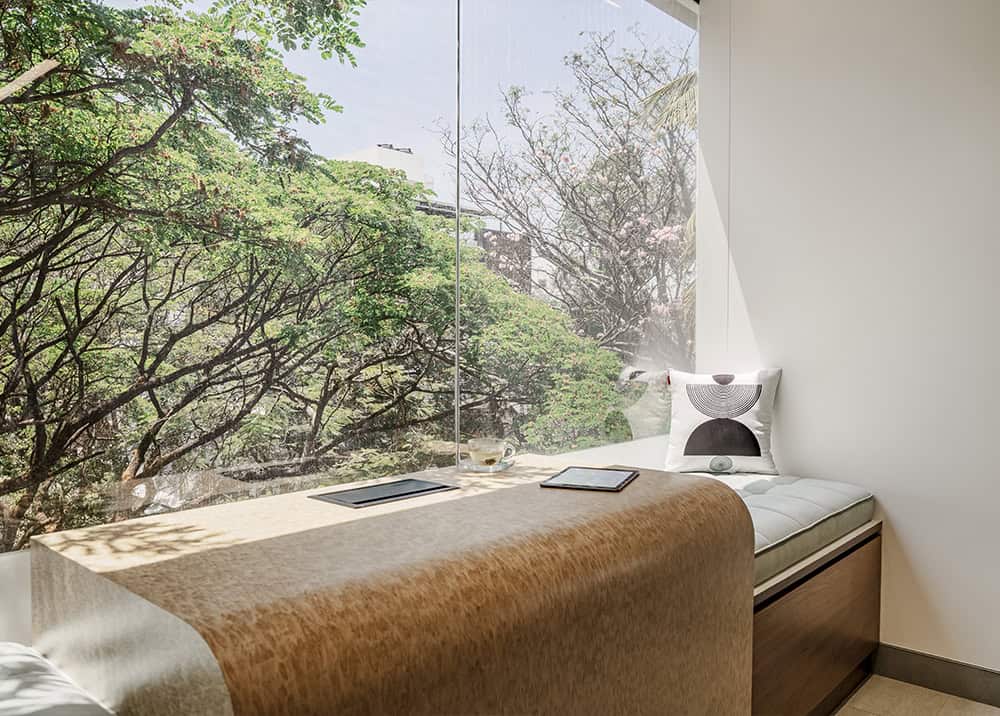
Natural veneers are an excellent environmentally friendly choice of surface material, as they use wood raw material much more efficiently than solid wood. Up to hundreds of square metres of thin veneer can be produced from a single log, maximising the use of valuable wood material. Natural veneers also sequester carbon throughout their life cycle and their manufacturing process uses less energy than many synthetic alternatives. Responsibly produced veneers also support sustainable forest management and the conservation of forest biodiversity.
What are natural quilts and why are you interested in them?
Natural veneers are thin sheets of wood, typically 0.5-0.8 mm thick, cut from wood and used to cover a variety of surfaces. They are manufactured by cutting a thin layer of wood either by turning or sawing, allowing the natural beauty and unique grain pattern of the wood to be exploited to the full.
Nature slices have become particularly popular among environmentally conscious designers for a number of reasons. Firstly, veneers allow real wood surface using only a fraction of the amount of wood that would be needed for solid wood structures. Secondly, veneers offer designers the opportunity to use rare and exotic wood species in a responsible way, without compromising forest biodiversity.
Architects and interior designers appreciate natural tiles in particular for their aesthetic value, environmental friendliness and versatility. They are ideal for furniture, wall panels, doors and other surface solutions, while providing a natural and warm atmosphere in spaces.
Why are natural veneers more environmentally friendly than many other materials?
Natural veneers offer significant environmental benefits compared to many other surface materials. One of the most important advantages is the effective use of. While solid wood furniture may require a considerable amount of wood, a veneered solution uses only a fraction of the same raw material.
Compared to synthetic materials, such as various plastic-based coatings, natural veneers are made from renewable raw materials. This makes them an essentially more sustainable choice in the long term. Natural veneers can also often be treated with environmentally friendly surface treatments, further improving their ecological footprint.
In addition, natural veneers do not contain harmful chemicals to the same extent as many synthetic materials, making them safer for both users and the environment. This is particularly important indoors, where emissions from materials directly affect indoor air quality.
How does the production of natural veneers save wood material?
The production of natural veneers is one of the most resource-efficient ways to use valuable wood material. Hundreds of square metres of veneer can be produced from a single log, which multiply the benefits of wood material compared to solid wood.
In veneer production, the logs are turned or cut into thin sheets, typically 0.5-0.8 mm thick. This method allows the valuable wood raw material to be exploited to the maximum - one cubic metre of logs can produce up to 800-1000 square metres of veneer. This means that many times more usable surface material can be obtained from the same amount of wood.
Modern veneer production methods have also become more efficient, which has reduced the amount of wasted material. Log turning makes almost full use of wood, and even by-products such as wood dust and small pieces of wood waste are often used for energy production or other purposes.
The veneer sheets also allow less common or rarer species to be used in a judicious and sustainable way, without endangering their populations. The same beautiful appearance is achieved with a fraction of the raw material.
What is the carbon footprint of natural veneers?
Natural veneers have a significantly lower carbon footprint than many synthetic materials. This is primarily because wood is natural carbon sink - as it grows, it absorbs carbon dioxide from the atmosphere and stores carbon throughout its life cycle.
When you compare natural veneers with, for example, plastic-based laminates, the difference is significant. Plastic-based materials are manufactured using fossil raw materials and energy-intensive processes that release significant amounts of carbon dioxide into the atmosphere. The production of natural veneers generally requires less energy and chemicals.
The carbon sequestered during the life cycle of natural veneers remains stored as long as the product is in use. This means that veneered furniture and structures act as long-term carbon stores. When you factor in the possibility of using dyed natural veneers and other innovative veneering solutions, the life cycle of the material and thus carbon sequestration can be further extended.
The carbon footprint of sustainably managed veneers is further reduced by planting new seedlings to replace the felled trees, which continue to absorb carbon dioxide from the atmosphere.
How do natural quilts support sustainable forest management?
Responsibly produced natural veneers are an important factor in promoting sustainable forest management. They provide an incentive for forest owners to manage their forests in the long term and in an ecologically sustainable way, as quality veneer trees grow slowly and require proper forest management.
Certifications such as FSC (Forest Stewardship Council) and PEFC (Programme for the Endorsement of Forest Certification) play an important role in ensuring that veneers come from responsibly managed forests. These certifications require that forest management takes into account ecological, social and economic aspects.
The production of natural quilts also encourages the maintenance of forest biodiversity. Since high-quality veneers require healthy and well-grown trees, it is in the interest of forest owners to ensure the well-being of forest ecosystems. This supports biodiversity, as well-managed forests provide habitats for a wide range of animal and plant species.
Moreover, veneers allow the use of valuable wood species in a way that does not endanger their existence, unlike large-scale solid wood use might do. This balance allows both the exploitation of natural resources and their preservation for future generations.
How can you use natural quilts in an eco-friendly project?
Nature walks offer a wide range of opportunities for environmentally aware projects. With the veneers you can create real wood surface feel by using a fraction of the amount of wood that would be used for solid wood solutions. This makes veneers an excellent choice for projects where environmental impact is to be minimised.
At the design stage, it is worth paying attention to the origin and certifications of the veneer. FSC or PEFC certified veneers ensure that the material comes from responsibly managed forests. You can also consider through-dyed natural veneers, which offer a wider range of colours while maintaining the natural structure of the wood.
Veneers can be used in a wide variety of applications, such as furniture, wall panels, doors and fixtures. By combining veneers with sustainable frame solutions, such as wood-based panels, you can create holistically environmentally friendly structures.
In an environmentally friendly project, the choice of surface treatment materials is also a good thing to consider. By favouring water-based or natural finishes, you can further improve the ecological credentials of the final result.
We offer a wide range of high quality natural veneers for different projects. When you choose veneer surfaces for a project, you can be sure that you are making a sustainable choice that is both aesthetically pleasing and environmentally responsible.