Through-dyed natural veneer is an innovative material solution where the entire structure of the veneer is dyed through and through - not just the surface. This manufacturing technique creates a significant difference compared to conventional veneers, as the colour of the dyed veneer is retained even after surface scratches and wear. Through-dyed natural veneer offers designers and manufacturers a more durable, uniform and long-lasting material that retains the natural texture and feel of the original wood, while allowing for a much wider range of colours.
What is a dyed-through natural veneer?
Through-dyed natural veneer is a wood material in which the dye is absorbed completely into the wood structure, not just coated on top. In the staining process, the natural veneer is impregnated with dyes using a pressure treatment process that ensures even absorption of the dye into the wood cell. This differs significantly from conventional finishes, where the colour or varnish is only added to the surface of the material.
The manufacturing process usually uses high-quality wood species such as beech or birch, which have a suitable cell structure for the absorption of dyes. The process combines both industrial precision and respect for the natural characteristics of the wood. The result: is a material that retains the natural texture and grain pattern of the wood, but the colour extends through the thickness of the veneer.
Through-dyed natural veneers, such as TABU's dyed-through veneers, offer designers a unique material that combines the naturalness of wood with a wide range of colour expression. Through-dyed veneers allow wood surfaces to be used in spaces where a plain veneer might not be visually durable or suitable.
How does a dyed-through natural veneer differ from a regular veneer?
The difference between a dyed-through veneer and a plain veneer is both structural and visual. A plain veneer is a thin layer of wood that retains its natural colour or may have been surface treated with a dye. Stained veneer, on the other hand, is completely impregnated with a dye, which fundamentally changes the properties of the material.
The main difference is in depth of colour. When an ordinary veneer is scratched or worn, untreated wood is revealed underneath. Through-dyed veneer retains its colour even if the surface is sanded or worn in use. This makes the material much more durable and long-lasting, especially in applications where the surface materials are subject to mechanical stress.
In addition to colour fastness, the dyed veneer is more resistant to UV radiation, which reduces fading caused by sunlight. Regular veneer often requires regular maintenance and re-treatment to maintain its colour, while dyed veneer retains its appearance for longer. Through-dyed veneer also offers a wider range of colours than plain veneer, allowing for a more varied visual expression.
What are the advantages of a dyed-through natural veneer?
The natural veneer through-dyeing offers significant advantages for both designers and manufacturers. The main advantage is the material's superior wear resistance, as the colour remains even if the surface wears or scratches. This makes it an ideal solution for public spaces and other areas of heavy use.
Other key benefits include:
- Visual consistency: the colour is uniform throughout the material, creating a harmonious finish
- Longevity: the colour does not fade, so the surface can be sanded and refinished without changing its appearance
- Better UV resistance: the colours of the material are better preserved in sunlight
- Machinability: the material can be machined like a normal veneer
- Ecology: longer lifetime reduces the need for material replacement, saving natural resources
The wide range of colours available for the through-dyed veneers gives designers the freedom to create spectacular and individual solutions while maintaining the feel and texture of the real wood material. This combination makes the dyed-through veneer a valuable tool for design-oriented designers.
What kind of applications are best suited to a dyed natural veneer?
Through-dyed natural veneer is ideal for applications where a durable, visually appealing and long-lasting wood material is required. It is an ideal choice especially for areas where the surface materials are exposed to more wear and tear or UV radiation than usual.
Optimal applications include:
- Public furniture and surfaces (hotels, restaurants, offices)
- Doors and fixed interior solutions
- Wall panels and acoustic solutions
- High quality furniture
- Boat and yacht interiors
- Accent surfaces and design elements in spaces
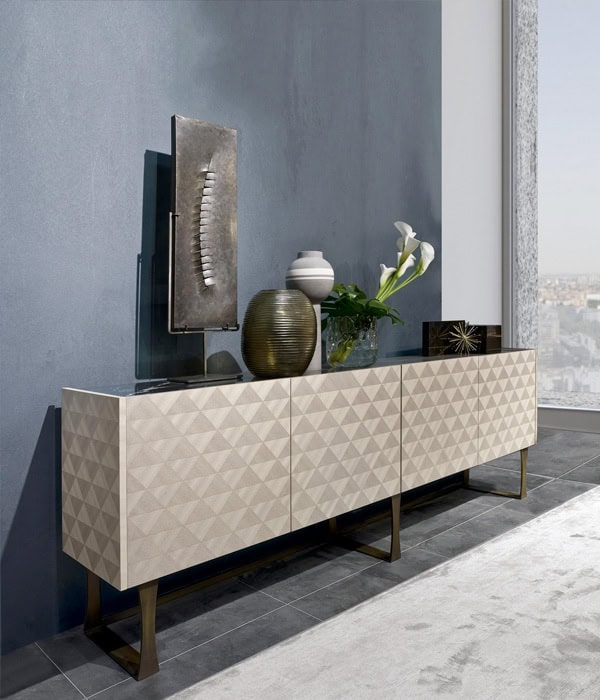
For designers through-dyed natural veneer provides a tool for creating spectacular wood surfaces even in areas where conventional veneer would not last or would require constant maintenance. For example, furniture in hotel lobbies or restaurants is subject to constant use, where the benefits of through-dyed veneer become clear. See completed projects and reference projects to get ideas for your own space.
How to treat and care for a dyed natural veneer?
The treatment of dyed-through natural veneer is essentially the same as for regular veneer, but with a few important differences. The material can be processed using standard woodworking techniques such as sawing, milling and sanding. After machining, the colour remains uniform, which is a significant advantage over surface-dyed products.
For surface treatment, transparent varnishes or oils are recommended, which protect the material while preserving its natural appearance and the characteristic colour of the dyed veneer. Bonding is carried out using the same methods as with normal veneer, but it should be noted that some adhesives may affect the colour shade.
In daily care, a dyed-through veneer is more comfortable than a regular veneer:
- Cleaning with a soft, fluffy cloth
- Avoiding strong solvents
- Minor scratches can be repaired by light sanding and refinishing
- Renewal of the surface treatment if necessary according to the stress of the application
One of the most significant advantages of a through-dyed veneer is that small scratches or abrasions do not reveal the different coloured surface underneath, as they do with a normal veneer. This makes from much easier and reduces the need for maintenance.
What should you know about choosing a dyed-through natural veneer?
When choosing a dyed natural veneer for a project, it is important to consider a few key factors. Firstly, when choosing a colour shade, it's worth bearing in mind that through-dyed veneer offers a deeper and more even colouring than surface-treated veneer. The shade may also vary slightly according to the natural grain pattern of the wood, which adds to the natural look of the material.
The thickness and flexibility of the material affect its suitability for different applications. Thinner veneers are more suitable for curved surfaces, while thicker veneers offer more durability. The surface treatment should be chosen according to the application - for public spaces, more durable varnishes are recommended, while for less stressed areas, oil-based finishes can be used.
We offer a wide range of TABU dyed-through veneers to suit a variety of design needs. Discover our comprehensive range of dyed-through veneers our experts will help you find the right material for your project, taking into account both technical requirements and visual objectives. You can view our range and find out more TABU's solid veneers on our website.
Natural veneer is an investment that pays for itself with its longevity and timeless look. Properly selected and installed, it provides a durable and eye-catching solution that will retain its value and appearance for years to come.